Personalized training should be based on more than an age, a body weight or a stated goal. A comprehensive assessment brings measurements, movement and life context together so the coach can make better initial decisions—and know what to reassess later.
Published July 13, 2023 · Updated August 18, 2026.
Assessment should improve the plan
Testing is valuable only when it changes a decision. A useful assessment helps select an appropriate starting level, identify the qualities most relevant to the goal and define a small set of measures to repeat. It should not overwhelm the client with numbers that never influence training.
At Prestige, the Longevity Assessment connects five views of the starting point: a 3D body scan, resting-metabolism testing, a full fitness assessment, a lifestyle assessment and a nutrition assessment.
3D body scan: one view of change
A 3D scan provides objective body measurements and a repeatable visual baseline. When repeated under reasonably consistent conditions, it can help show changes that a scale alone may miss.
The scan is not a medical imaging study or diagnosis. Its value is in trend context: how the measurements relate to the client's goals, training participation and other indicators of progress.
Resting metabolism: context for energy needs
Resting-metabolism testing estimates energy use at rest. It can add a personalized data point to a nutrition conversation, especially when generic calculators feel disconnected from the individual.
No single number determines a complete nutrition plan. Activity, training, food preferences, health context and the role of qualified nutrition or medical professionals still matter.
Fitness assessment: match the exercise to the person
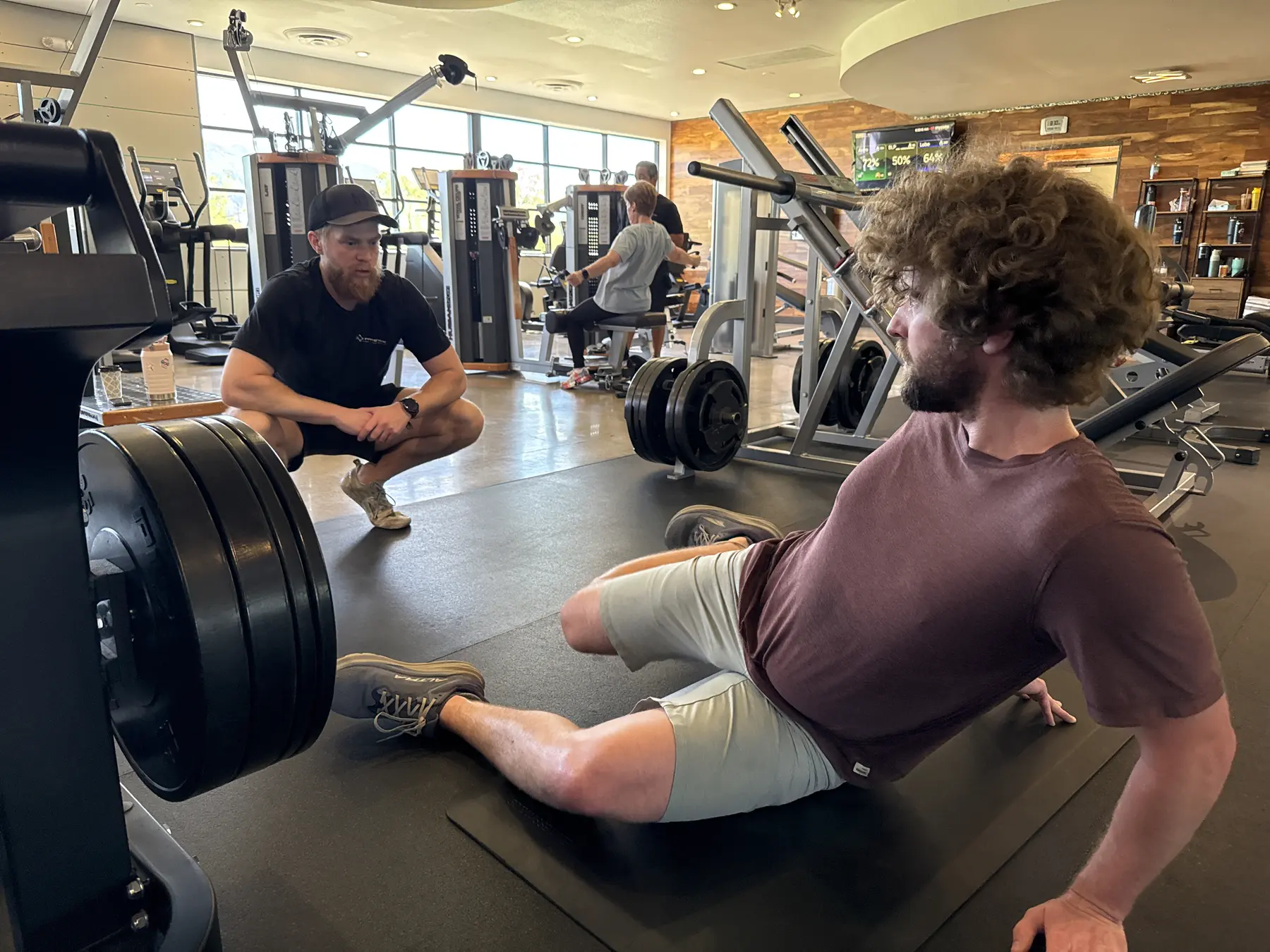
A full fitness assessment can explore relevant movement patterns, strength, balance and conditioning. The exact tests should reflect the goal and starting point. A new client rebuilding confidence does not need the same testing experience as a competitive athlete.
The result should be a practical starting level. A trainer can then choose exercises that are challenging enough to create progress and scalable enough to perform with confidence.
Lifestyle and nutrition: make the plan livable
Training does not happen in isolation. Work demands, sleep, stress, travel, caregiving, food patterns and previous exercise experiences influence what a client can recover from and repeat. Lifestyle and nutrition assessments make those constraints visible before they repeatedly derail the plan.
This context helps the team simplify. Rather than prescribing every available service, Prestige can keep personal training central and introduce additional support only when the assessment shows a clear reason.
Reassessment closes the loop
The first assessment is a baseline, not a verdict. Repeat the measures that matter after an appropriate training period, compare them with the client's experience and adjust the next block. That cycle—Assess, Train, Measure, Adjust—is the core of Prestige Edge.
Individual results vary, and fitness assessments do not diagnose or treat medical conditions. Concerning symptoms or clinical questions belong with the appropriate licensed healthcare professional.
One useful takeaway
A comprehensive assessment earns its place when it creates a clearer personal-training plan, a relevant measurement strategy and a better next decision.
Want an assessment that turns into an actual plan? Our coaches build personal training in Tucson around your baseline, inside a private training gym on N 1st Ave. It is an easy drive for clients coming down from the Foothills, too; see personal training near the Catalina Foothills.
Primary and public-health sources
Sources and further reading for the ideas discussed above.
- Current Physical Activity Guidelines for AmericansU.S. Department of Health and Human Services
- Adult Activity: An OverviewCenters for Disease Control and Prevention